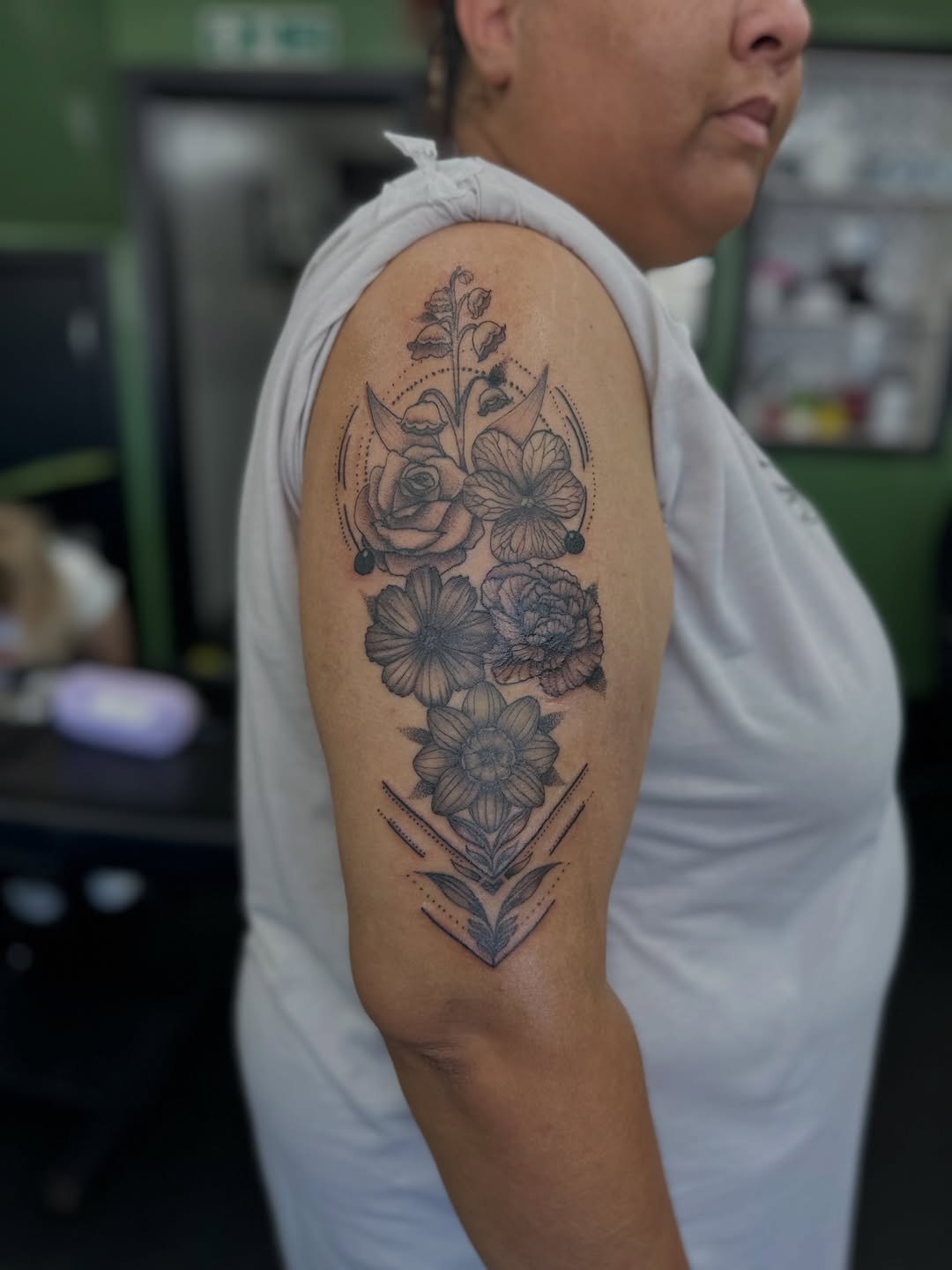
Dotwork tattooing builds images not from lines and shading passes, but from thousands — sometimes hundreds of thousands — of individual ink dots placed precisely into the skin. It's a meditation in patience: for the artist, the slow accumulation of dots; for the client, a gradual revelation of the finished image. The results, when done well, have a texture and depth unlike anything achievable through conventional tattooing.
The Technique Behind Dotwork
In conventional shading, an artist uses groups of needles moving rapidly to create smooth grey wash. In dotwork, the artist uses single needles (or very small groupings) and places individual dots by hand or with a precisely controlled machine. The density of dots determines the tonal value: dots packed closely together create dark areas; widely spaced dots create pale greys; bare skin creates the highlights.
This approach — called stippling in fine art — has been used in engraving and illustration for centuries. Gustav Klimt's drawings, old master engravings, and 19th-century scientific illustrations all used stippling to create tonal range. Dotwork tattooing applies exactly the same principle to skin.
What Subjects Suit Dotwork Best
The technique's strengths — intricate texture, controlled tonal gradation, and extraordinary fine detail — make it ideal for certain subjects:
- Mandalas — the most common dotwork subject. The combination of geometric precision and the textured depth of dotwork creates mandalas of remarkable beauty.
- Sacred geometry — complex geometric patterns with interior shading rendered in dots have a stained-glass quality unlike any other approach.
- Portraits in negative space — dotwork can create faces and figures in which the background dots define the subject through contrast rather than direct line. A ghostly, ethereal effect.
- Nature studies — insects, plants, and anatomical forms translate beautifully into dotwork's textured realism.
- Dark, atmospheric scenes — dark forests, cityscapes, or cosmic imagery where the gradual buildup of dots creates a painterly, atmospheric quality.
Dotwork and Geometric — Inseparable Companions
Dotwork and geometric tattooing are deeply intertwined. Most geometric mandalas use a combination of precise linework for the geometric structure and dotwork shading to fill and graduate the interior. The two techniques complement each other perfectly — lines for structure, dots for depth.
How Long Does Dotwork Take?
Dotwork is slower than conventional tattooing. Creating tonal gradations through individual dot placement takes significantly more time than running a shader needle through the same area. A dotwork piece that might take 2 hours in grey wash could take 4–5 hours in pure dotwork. This is part of why dotwork pieces tend to command higher rates per square centimetre than conventional work.
Dotwork in Romford
Sleep Well Tattoo Parlour offers dotwork tattooing for mandala commissions, geometric work, and fine art stipple pieces. If you're drawn to the textural quality of dotwork, bring reference images to your consultation — we'll advise on whether your concept works best in pure dotwork, a dotwork-linework hybrid, or a conventional approach.
Does dotwork hurt more than conventional tattooing?
The individual needle passes in dotwork can feel more intense than smooth shading strokes, though many clients find the frequent breaks between dots more manageable than sustained shading. Pain tolerance is highly individual — placement matters more than technique in determining overall comfort.
How does dotwork age?
Dotwork ages differently from line-based tattoos. Very fine dots can soften and spread slightly over time, causing tightly packed dotwork to become more uniformly dark. Widely spaced dots in highlight areas hold better. Larger dots are more durable than ultra-fine single-needle work. An experienced dotwork artist will plan the density of their dot patterns with ageing in mind.
Can dotwork be combined with colour?
Yes — and some of the most striking contemporary tattoos use dotwork shading with strategic colour accents. A dotwork mandala with red or gold colour at the focal points creates a beautiful effect. Discuss your colour ideas at consultation and the artist can advise on what works harmoniously with the dotwork technique.
Book Your Dotwork Tattoo in Romford
Sleep Well Tattoo Parlour is open 7 days at 12 Carlton Rd, Romford, Essex RM2 5AA. Book a consultation for dotwork and mandala commissions via WhatsApp.
Book via WhatsApp klarna Pay with Klarna